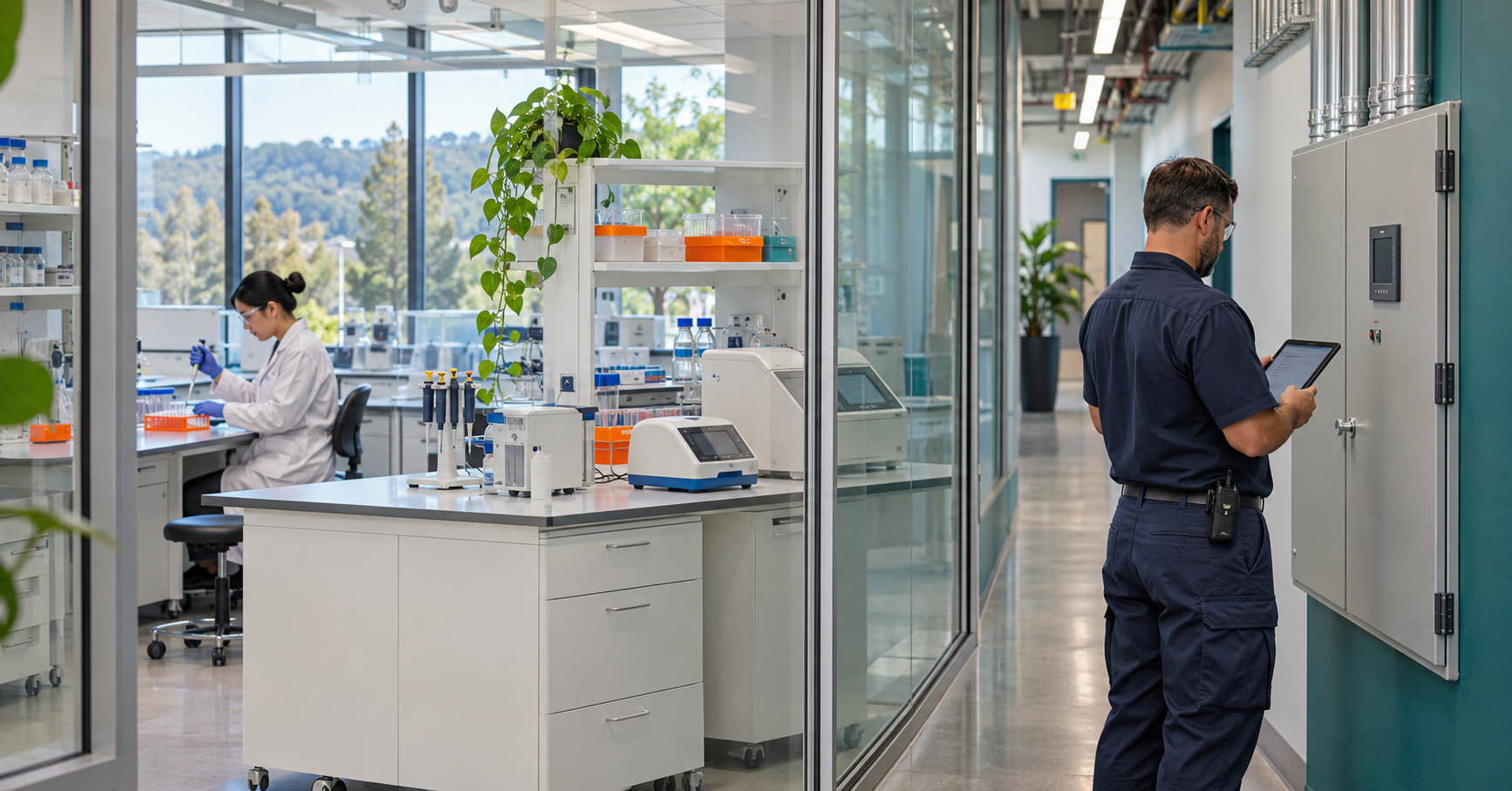
When Facilities is doing its job well, nobody notices.
And that’s both the compliment and the problem.
People arrive, access the building, and get to work. Laboratories have the utilities and supplies they need. Equipment gets serviced. Shipments arrive. Waste gets collected. The space supports the work happening inside it.
That kind of ordinary day takes planning, coordination, and attention. When those efforts succeed, most people never need to think about them.
The work behind an uneventful day
In a biotech environment, Facilities helps maintain the conditions that allow research to continue.
That can mean coordinating a gas delivery before supply becomes an issue, scheduling maintenance around an experiment, following up on a temperature concern, or making sure a vendor arrives with the right access and scope of work.
Each task may seem small in isolation. Together, they create a reliable operating environment.
Scientists can focus on their experiments because someone else is watching the infrastructure, coordinating service providers, and resolving problems before they interrupt the day.
When reliability becomes an assumption
The challenge comes when consistent performance makes the effort behind it harder to see.
An equipment failure is visible. The maintenance that helped prevent one attracts much less attention.
A delayed shipment creates an immediate problem. A shipment that arrives as planned rarely prompts a conversation about the coordination behind it.
Over time, leadership can lose sight of what reliable operations require. Decisions about staffing, maintenance, and service coverage can then be made without a clear picture of the work those resources support.
Making operational value easier to understand
Facilities teams need ways to explain their contribution in terms the business can use.
A list of completed work orders provides useful information, but it becomes more meaningful when connected to research needs, operating priorities, and emerging risks.
For example:
• Explain which critical systems received maintenance and how the work was coordinated around laboratory schedules.
• Highlight recurring equipment issues so leadership can make informed repair or replacement decisions.
• Show where vendor performance is improving or creating additional work for the team.
• Identify gaps in service coverage before they become urgent.
• Connect space and infrastructure decisions to the company’s scientific plans.
Use evidence where it is available. Be clear about what was completed, what remains uncertain, and what needs a decision. Claims about avoided costs or prevented downtime should have a reasonable basis.
What leaders can ask
A useful conversation with Facilities can start with a few questions:
• What required the most attention this month?
• Which recurring problems are we working to resolve?
• Where are we relying too heavily on one person or vendor?
• What decisions would help the team support the science more effectively?
These questions create room to discuss the work that sits behind daily reliability. They also help distinguish a well-supported operation from one that depends on constant improvisation.
A reliable foundation for science
An uneventful day can be a meaningful operational achievement.
The goal is to build facilities and support systems that people can rely on, while giving leadership enough visibility to sustain them.
At Praxis Operations Advisors, I help biotech teams strengthen that foundation through fractional facilities leadership, operational assessments, and hands-on implementation.
So scientists can focus on science.